The price of unity: How religious consolidation and internal political debates affect the management of national challenges
In the context of international security, the capacity to confront regional challenges is often determined by the level of consolidation between state and public institutions. Recent developments in neighboring Iran and Armenia illustrate two different approaches to this relationship.
While the threat of a climate crisis (drought) in Iran has become a tool for state-religion unification, in Armenia, and especially in the capital Yerevan, against the backdrop of health-hazardous environmental issues, tactics of national force division are emerging, focusing on debates surrounding the internal issues of the Church.
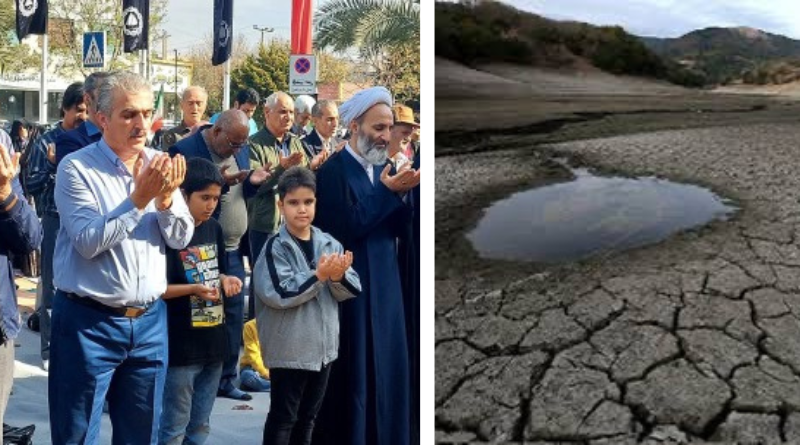
The threat of drought in Iran, with President Massoud Pezeshkian announcing that precipitation accounts for only 3% of previous years’ levels, and the risk of 19 reservoirs drying up, has become an axis of national consolidation. The nationwide prayer, led by a high-ranking cleric, is not merely a religious ceremony; it is state policy where the spiritual and political authorities combine their efforts to manage a common vital crisis. This mechanism makes it possible to concentrate public attention and resources on the vital issue.
A contrary picture is observed in Armenia. Although there is no drought disaster on the scale of Iran’s, the sharp deterioration of air quality in Yerevan has created an unfavorable environmental situation hazardous to health. Despite this, state and public priorities are diverted. Instead of focusing on environmental solutions, energy is consumed by internal divisions.
The authorities of the Republic of Armenia (RA) insist that their actions are directed not against the institution of the Church but against a group of clergymen who are weakening the Church by moving away from the true faith. This approach, regardless of its real motives, indicates that in the absence of a national consolidation tool, the state and the public are diverted from more crucial challenges, spending their own strength on internal conflicts. Furthermore, the environmental problem we presented is only one of a group of important challenges.
A comparative analysis shows that Iran’s state-religious unity model ensures national governance and the concentration of resources around a common threat during moments of crisis. Conversely, the existing tension and public debates between internal structures in Armenia, which manifest as differences in value systems, directly impede the resolution of real challenges related to environmental stability and national security.
While nature gives clear signals, Armenia’s political sphere is preoccupied with instigating and participating in fluctuations within internal unrest.