Pashinyan Proposed Two Options for ENA Management: What Are They?
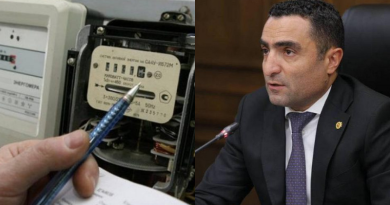
Prime Minister Nikol Pashinyan announced that the state is considering two options for the future management of the “Electric Networks of Armenia” (ENA). He conveyed this information on November 25 during a meeting with Romanos Petrosyan, the temporary manager of ENA.
According to the Prime Minister, the first option envisages fully nationalizing ENA through established procedures and subsequently transferring the state property for professional management on a concession basis, under the supervision of the Armenian government. This, according to Pashinyan, is the most acceptable option.
The second option is the involvement of a new investor in the sector, which, the Prime Minister stated, will only be accepted if the first solution cannot be implemented. In addition, he stressed that the new entity must pay to take over the company.
During the meeting, the temporary manager, Romanos Petrosyan, presented the violations he had recorded during the former management, including overbilling, under-registration of electricity from solar power stations by autonomous producers, and other inconsistencies. The Prime Minister qualified these as “money laundering.” Petrosyan also claimed that the company’s entire database spanning from 2018 to November 2024 was erased.
It should be recalled that ENA was deprived of its license on November 17. According to law, the Karapetyans, the owners of “Tashir Capital,” and the government have three months to negotiate. According to an independent audit, ENA’s own capital is estimated at approximately $360 million, excluding multi-million liabilities.
“Tashir Capital” has not yet responded to the latest statements. Earlier, David Ghazinayn, the former director of ENA, described the process as “political revenge.” Following the arrest of Samvel Karapetyan, Pashinyan declared his intention to nationalize ENA.
Narek Karapetyan, Chairman of the ENA Board of Directors, recently stated that the authorities’ goal is to turn ENA into “another structure financing the Civil Contract (CC) party,” which could serve as a tool during elections.