The Armenian Apostolic Church celebrates Bun Barekendan
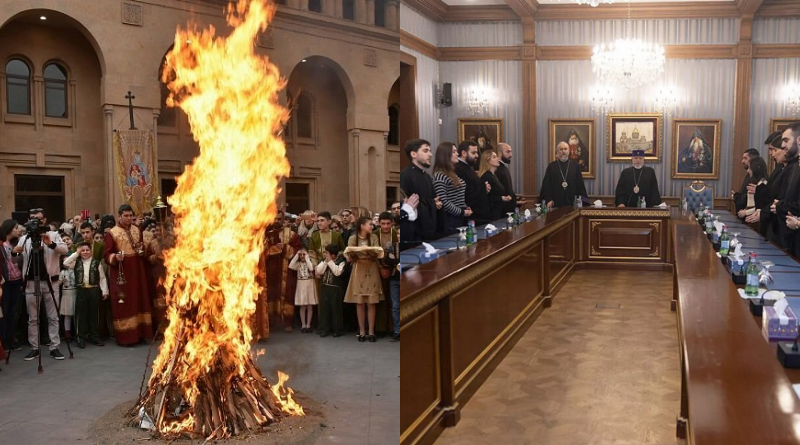
Today, February 15, the Armenian Apostolic Church celebrates Bun Barekendan (Great Carnival), the feast preceding Great Lent. It is considered a day of joy and festivities, symbolizing the carefree life of Adam and Eve in Paradise.
On this feast day, it is customary to serve sweets, especially baklava, as well as rice pilaf prepared with butter and other non-meat, rich dishes.
During these days, abundant food and feasting were permitted. Preference was given to a wealth of meat, dairy products, and oils. Various dishes were prepared from beef, mutton, and poultry. In the early days, large quantities of gata and halva were made. In the evenings, milk soup (katnapour), matzoon (yogurt), and boiled eggs were eaten. Traditional foods such as phatila, sron, and bkhbkhik were prepared. Khashil was a mandatory dish that marked the beginning of the feast and was prepared in all households for two weeks.
According to folk tradition, Barekendan has also been a day of freedom and ritual mockery; masquerades and humorous performances were organized, where vices and false morals were ridiculed. The custom of a “mock wedding” was also widespread, involving symbolic transformations: a boy would wear a girl’s clothes, a girl would wear a boy’s, and they would be “married.”
According to church order, Great Lent begins at midnight and lasts for 49 days. During this period, believers prepare for the Feast of the Holy Resurrection (Easter) through fasting and repentance.