Drinking Water Polluted in Amulsar: What is Known
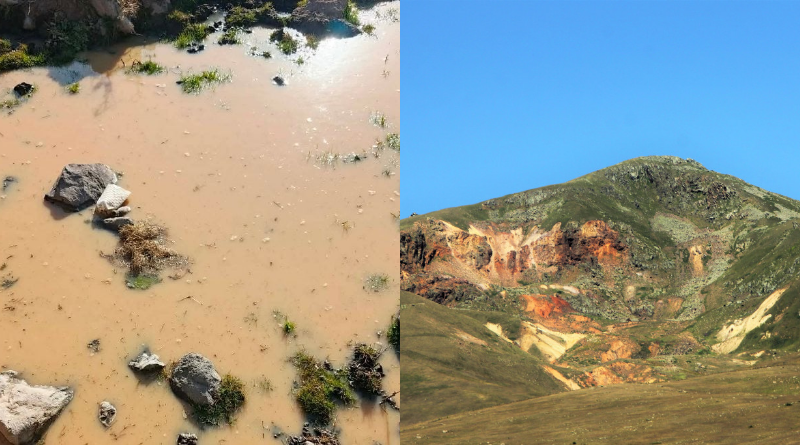
An administrative proceeding has been initiated by the Environmental Protection and Mining Inspection Body (EPMIB) based on a video regarding the pollution of drinking water as a result of construction work carried out in the area of the Amulsar mine.
Environmentalists raised the alarm that the drinking water in the village of Kechut, Vayots Dzor Province, has changed its natural color and condition.
The Inspection Body’s statement notes that “additional information will be provided after the completion of actions carried out within the scope of the proceeding.”
It should be recalled that Amulsar is the second largest gold deposit in Armenia, managed by “Lydian Armenia” CJSC, a subsidiary of the international company “Lydian International.” The mine had been non-operational for a long time, and in 2019, the company announced that it was losing $500,000 for every day of inactivity.
In 2023, the Government of the Republic of Armenia, “Lydian Armenia,” and the Eurasian Development Bank (EDB) signed a tripartite memorandum, planning to make an investment of $250 million. However, in December 2024, the EDB temporarily suspended its participation in the project.
On August 8, 2025, the company announced that construction works had resumed in Amulsar. The Minister of Finance of the Republic of Armenia, Vahe Hovhannisyan, in turn, was making predictions that 4 tonnes of gold would be extracted from the mine in 2026.
Concerns about the problems of mining in Amulsar have been raised for years by various specialists, environmentalists, journalists, human rights defenders, and politicians, and they have fought against the implementation of this project. There are different opinions regarding the exploitation of the Amulsar mine. Environmentalists are concerned about the potential negative impacts of the mine’s open-pit extraction on the environment. They note that the mine’s operation could endanger the sources of Jermuk’s mineral waters. Moreover, the Arpa and Vorotan rivers flow near Amulsar. The Arpa River flows into the Kechut Reservoir, which, in turn, feeds Lake Sevan. The pollution of these rivers could have a direct impact on Armenia’s drinking water reserves.
It remains to be concluded here that the concerns of the residents are justified.