Baku’s verdicts and omissions: interview with Artak Beglaryan
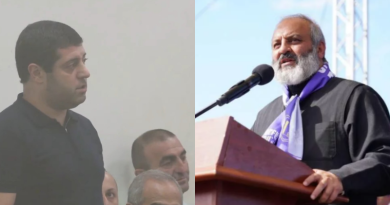
On February 5, the Baku Military Court released the verdicts in the cases brought against former members of the military-political leadership of Artsakh. Former President of Artsakh Arayik Harutyunyan, former Commander of the Defense Army Levon Mnatsakanyan, former Deputy Commander Davit Manukyan, former Speaker of the National Assembly Davit Ishkhanyan, and former Minister of Foreign Affairs Davit Babayan were sentenced to life imprisonment.
Former Presidents of Artsakh Arkadi Ghukasyan and Bako Sahakyan were sentenced to 20 years in prison.
They were charged under dozens of articles, ranging from preparing for war, genocide, and violations of the laws and customs of war to terrorism, financing of terrorism, and the violent seizure of power.
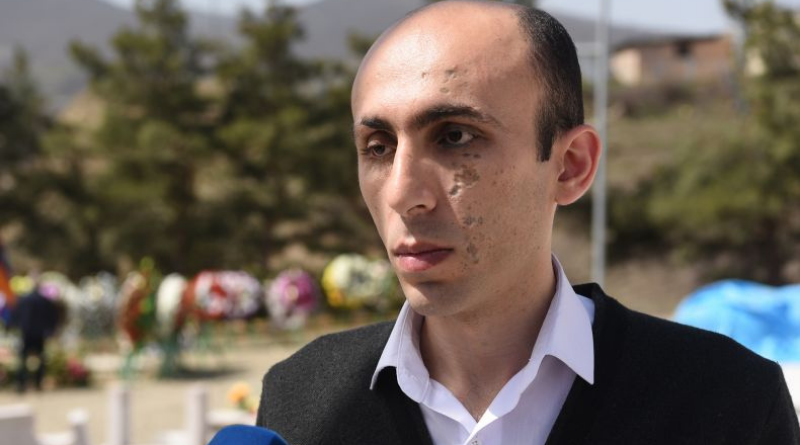
We spoke with the former Human Rights Ombudsman (Ombudsman) of Artsakh and President of the “Artsakh Union,” Artak Beglaryan, regarding the verdicts issued against the military-political leadership, the actions of the Armenian authorities, potential mechanisms for the return of prisoners, and other issues.
Mr. Beglaryan assesses the legal actions of the Armenian authorities on international platforms as insufficient. According to him, many steps that should have been taken were not.
“They often try to justify themselves by saying they are carrying out many actions that are simply not public due to the sensitivity of the topic. But I believe that inaction is often hidden behind the curtain,” he notes.
Speaking about what the authorities should do, Beglaryan emphasizes that the issue of prisoners should have been set as a strict precondition in relations with Azerbaijan. He is convinced that this issue should also have been presented as a priority in contacts with mediators.
Referring to the American role, Beglaryan stresses that Armenia has a balance problem in its relations with Azerbaijan, while the US is interested in the peace process. In his opinion, if the return of prisoners had been set as a precondition for signing the August 8 agreement, the Trump administration could have achieved results through tough intervention. “That was a realistic scenario,” he says in our conversation.
According to Beglaryan, inaction has also been observed in monitoring the sham trials and ensuring international access to the prisoners. He recalls that after the withdrawal of the Red Cross, no effective steps followed, even though specific mechanisms had been proposed and there was certain interest from the Swiss side. He is convinced that Armenia could have applied to Switzerland, as a third country, to resolve consular issues.
Speaking about the possible impact of visits by US Vice President J.D. Vance, Beglaryan notes that such visits could have had—and still can have—an impact, but the issue must be presented as a principled demand rather than an act of goodwill.
“Aliyev is a pragmatic dictator; one must speak to him either in the language of force or through political bargaining,” he says, adding that the American side could have used the second option, as TRIPP is fundamental for Azerbaijan, and the US is its guarantor.
Regarding the role of the Diaspora, Beglaryan notes that it is possible to exert more coordinated pressure through the authorities of host countries. According to him, the Armenian-American Diaspora, in particular, has potential for influence, but efforts are often fragmented, conditioned both by internal divisions and the lack of clear signals from the Armenian authorities.
Artak Beglaryan, President of the “Artsakh Union,” considers it concerning that when the blame for the loss of Artsakh is placed on the military-political leadership held in Baku, it reduces public pressure and solidarity both in Armenia and the Diaspora.